
Nurse Trees
Riffing with Life and Death and Life…

Recently I listened to a fascinating and insightful 5-way conversation about the “ecology of communication”. I commend it to you as a helpful resource in our polarised world - if you have a spare two hours - but mention it now for what arose during the closing thoughts.
One of the participants, Vanessa Andreotti, Dean of the Faculty of Education at the University of Victoria (Canada), spoke about ivory towers and how they are, like much else, facing an existential crisis. She felt they were more like towers of Pisa, leaning precariously in our time of polycrisis.
This led her to assert that it matters how things fall. Using an arboreal analogy, she went on to suggest that if it’s catastrophic and scattered then it takes longer to build back, compared to more gently when that which falls can become a ‘nurse’ tree. A foundational hunk upon which new saplings arise.
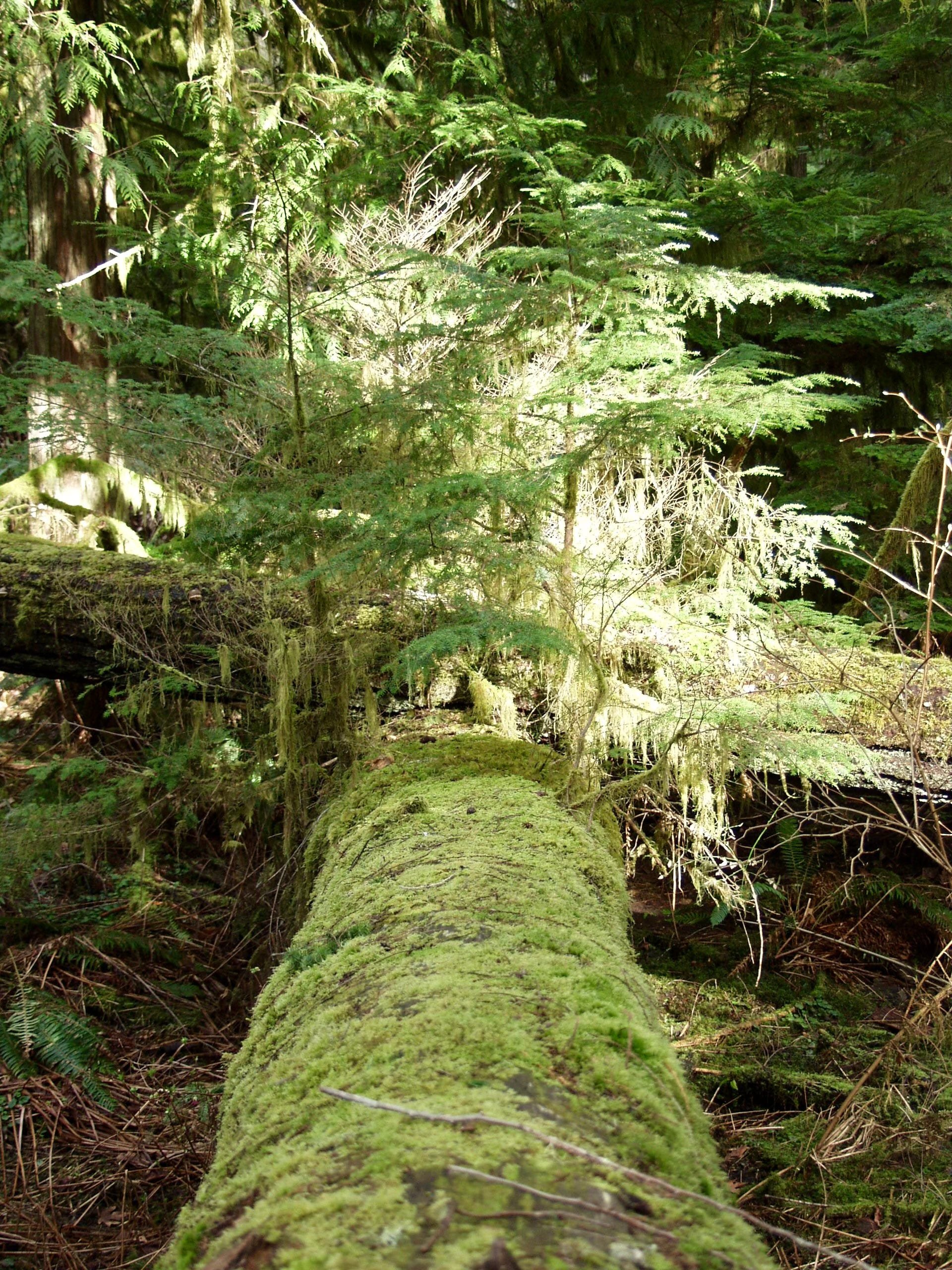
I’ve had the great fortune to witness such nurse trees in the old growth forests of western Canada (image above), where Hemlock trees are the peak vegetal expression. I was moved to write a poem about them; nothing fabulous yet a true reflection of what I felt. Back in 1993 I’d become fascinated by patterns in space and time.
The Hemlocks Return
Circle in circle
Around they go,
Pattern within pattern
Over time they grow.
Like ghosts from the past
Rising up once again,
To reclaim their place
At the top of the chain.
Vanessa’s thoughts made sense, certainly from a human point of view, and maybe from Gaia’s too. I’m still contemplating her assertion. Meanwhile, as is often the case for me, serendipity brought me the following wise and related words via plant phenomenologist Sydney Kale and her zine I, Garden.
[True] “forests are places where the dead remain among their community: visible and taken care of by those they shared their space with. They slowly celebrate death together by creating life with it.” A definition of old growth, for sure, yet also how we might like to see human transitions, and not just after death/fall.
It’s apt that I’m writing this towards the end of October/ beginning of November when the spiritual veils are supposed to be at their thinnest, and our ancestors celebrated. Also that Vanessa Andreotti authored the celebrated book Hospicing Modernity. As with autumn leaves, perhaps it does matter how life falls.
There’s another, temporally longer kind of nurse tree: volunteer (aka pioneer) plants that - recalling the English saying ‘Thorn is the mother of Oak’ - proactively prepare the ground for later stages of the forest cycle. We can but wonder whether they’ve a knowing of this Gaian principle: life creating the conditions for life.
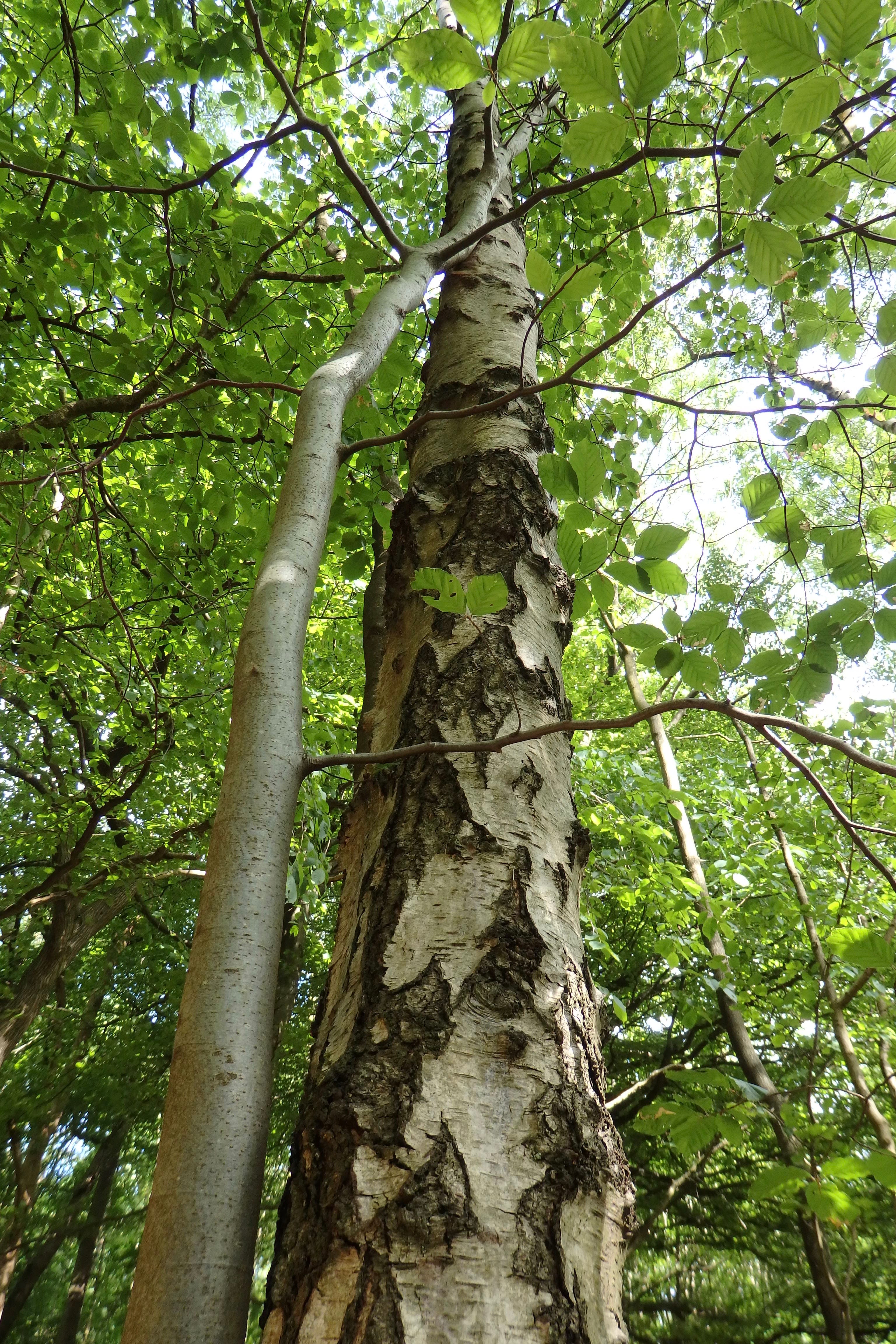
There are those, like Isabella Tree, that would have rewilding initiatives largely inspired by such Gaian creativity, rather than simply planting trees that barely equate to forest. Whilst I would agree, my mind moves toward contemplating something else: how we might each prove nourishing to Gaia*, in life, as in death.
*I.e. our family, culture, ecosystem, planet.