
W is for...
Wort

As in Butterwort (Pinguicula), Garlicwort (Alliaria petiolata), Lungwort (Pulmonaria), Pilewort (Ranunculus ficaria), or Woundwort (several species of Stachys), to give just a few examples from many. The suffix wort signifies a plant that has historically been used for food or medicine, the first part of the name normally pointing to the food use or the dis-ease for which it was thought to be beneficial.


The Oxford English Dictionary suggests it’s been used for a long, long time. It derives from the Old English word wyrt, which itself has Proto-Indo-European origins linking it with root. Karen Geisler, blogging on The Hortiholic, observes that most worts are found in or at the edge of forest; this may support ancient usage as it infers that these plants were named when landscapes were less deforested. In Britain this was many centuries ago. It’s also interesting to note that forest edges are sites of active repair to Gaia’s green mantle, and so you might expect to find more healing plant-forms.
Modern medicine has largely left the healing aspects of such indigenous wisdom in the shade - for the record, disproving it in some instances, yet proving it in others, whilst wild food has suffered a not dissimilar fate. However, here in Britain at least, there now seems to be renewed public interest in both foraging and herbalism. There will be multiple reasons for this yet it reflects, I feel, a growing desire, even need, to reconnect our inner and outer ecology, and find greater wellbeing.
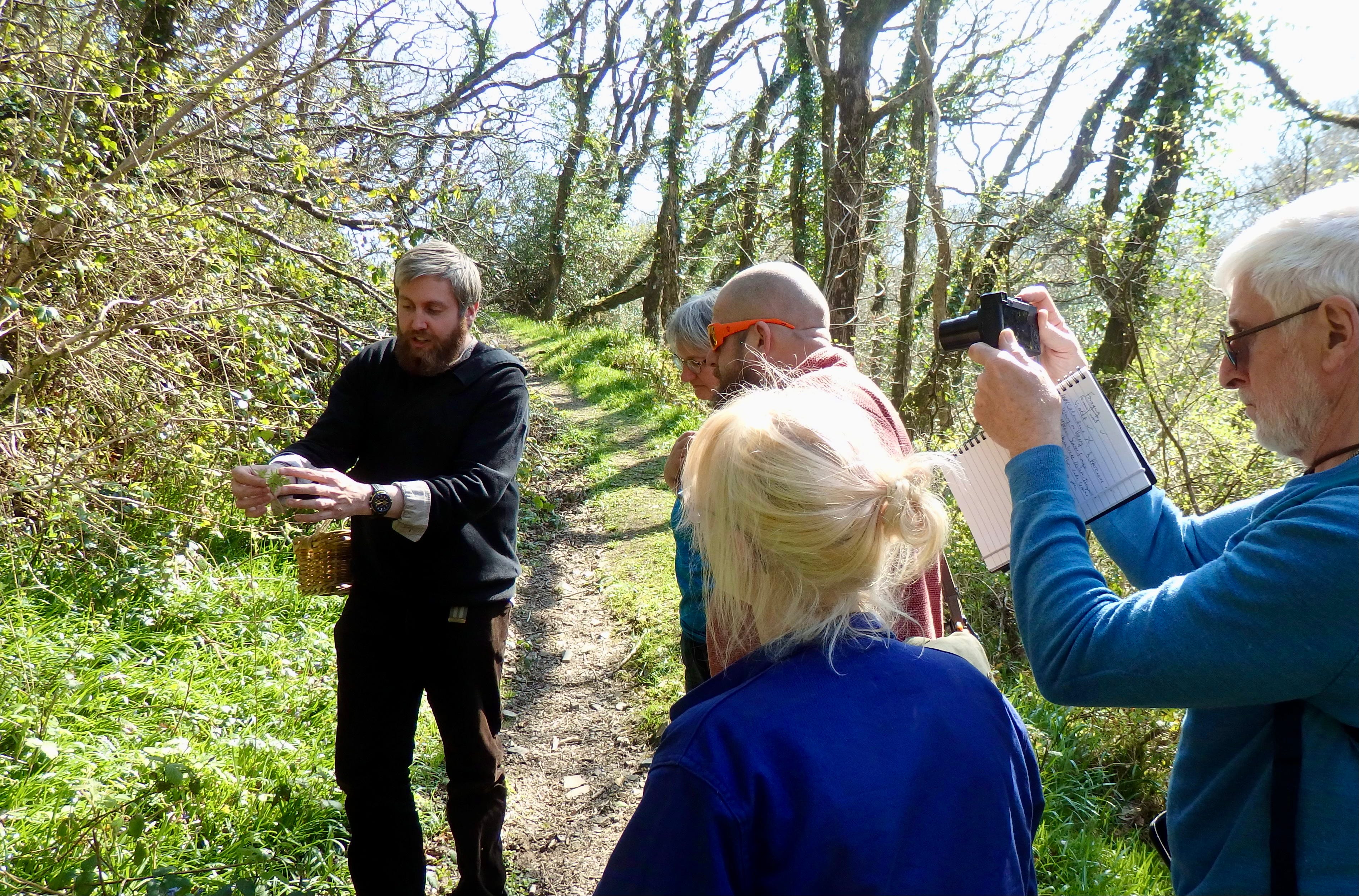
For beginners, leafing through a good Flora and noting the worts could be a good way to start, whilst there are increasing numbers of primer books available. I would also recommend seeking expert tuition, especially if confidence feels an obstacle. Indeed, it’s often a necessity in relation to medicinal aspects - some plants are dangerous with the wrong dose. Foraging workshops are becoming more commonplace whilst a good herbalist won’t be far away. Effort in either or both of these directions could be a vital, and thoroughly enjoyable, investment.
Always remember too, as my herbal tea bags often remind me, “an attitude of gratitude brings opportunity.” To plants we owe a great debt - companions in so many ways - and it’s all too easy to forget.
“One of the most complex and intimate relationships which most of us can have with our environment is to eat it.” Naturalist Richard Mabey
*******
This article is an excerpt from The Z-A of Plants and People - An Alternative Guide to Greater Harmony, previously unpublished.
ID answers, L-R: Pilewort (Ranunculus ficaria), Navelwort (Umbilicus rupestris), Sneezewort (Achillea ptarmica), Mugwort (Artemisia vulgaris), Woundwort (Stachys x ambigua), Ragwort (Jacobaea vulgaris), St. John’s wort (Hypericum perforatum), Garlicwort (Alliaria petiolata), Stitchwort (Stellaria holostea).
From John Watkins, a history of Bideford 1792
“On Northam Burrows there is a beach of pebbles about three miles long, of very considerable breadth and depth, so that altho' they have been long used as ballast, and for paving, &c. the number is not perceptibly diminished. These stones are from 6 to 18 inches long, curiously variegated with veins of different colours, and sufficiently hard to take a fine polish; of the outside of them grows a great quantity the Lichen marinus, or sea liverwort, which is much esteemed by the neighbouring inhabitants, as a wholesome and pleasant food, being gently opening and an antiscorbutic. It is frequently packed up in earthen pots, and sent to London.”