
Z is for...
Zingiberaceae

"When we try to pick out anything by itself, we find it hitched to everything else in the Universe." John Muir, 19th Century naturalist
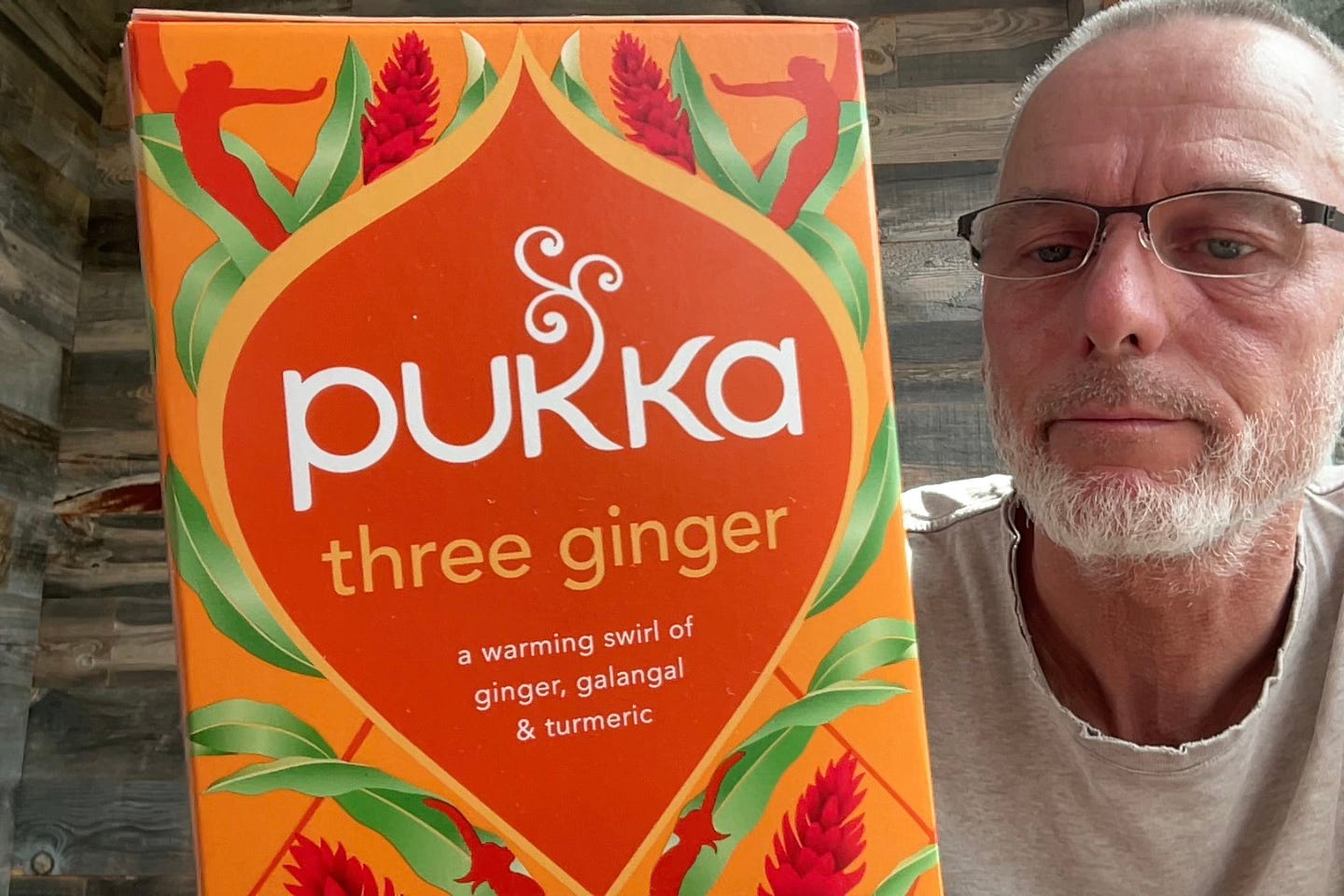
Whenever I see or hear this word, pronounced ‘zin-ji-bar-ace-ee’, I think: gingerbread. Aside from being an easy ‘Z’ to start with, this is actually the ginger family, a group of closely related aromatic herbaceous perennial plants found across the tropics. It includes the well known spices cardamom, turmeric, galangal, and of course ginger itself. Many of the 1300 or so species within the family are also cultivated for their showy flowers. That number, by the way, equates to roughly one third of one per cent of all vascular plants, i.e. those with water and sap conducting tissue, the key evolutionary attribute that allowed early plants to colonise the land.
Whilst we don’t find gingers in cooler temperate climates, Zingiberaceae fossils have been found in both Europe and North America, reminding us that climatic zones have shifted over the aeons along with the planet’s tectonic plates and land masses. Indeed, everything on Earth - and beyond - is constantly on the move for one reason or another, a big picture reality we so easily forget within human perception and timescales. Change is the constant we’ve all struggled with.
In terms of evolution, the ginger family dates back to the Late Cretaceous period, around 85 million years ago. It represents a development of the line of monocotyledonous plants - if you recall your biology from school, those with a single seed leaf (cotyledon) within the embryo, together a significant branch of the flowering plants (the angiosperms, which first appeared around 130 million years ago). Hence, the gingers are related, though slightly more distantly, to the grasses, bromeliads, palms, orchids and lilies. And so on.
Botanists have invested much time and energy into dividing up, classifying and re-classifying the plant kingdom, especially following modern genetic analysis. Yet we need to remember that every plant, indeed all life, is ultimately related, an ongoing flow of genetic material - think: film reel not single frame - sharing a common source back in the realms of ancient bacteria. LUCA to proffer a name, the last universal common ancestor.
Hence, contrary to much of our modern behaviour, humans do not exist apart from nature but are an inextricably linked expression of Life on Earth. What we do to the 3.8 billion years of accumulated complexity that is the web of life, we do to ourselves. Together we strand, or fall.
Deeper dives: Try the book RHS Genealogy for Gardeners by Dr. Ross Bayton & Simon Maughan, or look up the Zingiberaceae on Wikipedia.
(This is an excerpt from my unpublished The Z-A of Plants & People - An Alternative Guide to Greater Harmony.)